


 Language: English
















Solutions
Horse Construction offers full range of structural strengthening materials with technical supports, documentation supports, products supports, project supports.
Causes of Pre-stressed Carbon Fiber Plate Rupture

a brand of Pre-stressed Carbon Plate
Splitting of prestressed carbon plates—also referred to as delamination or edge cracking—fundamentally involves the carbon plate stratifying or tearing along its width or thickness within or near the anchorage during the tensioning process. Failure typically occurs at stress levels below 1000 MPa, falling far short of the carbon plate's theoretical strength.
I. Issues with the Quality of the Material Itself
Poor carbon fiber quality / Insufficient fiber content: The fibers lack adequate strength or exhibit excessive broken strands; alternatively, there is an excess of resin resulting in an insufficient fiber volume fraction (below 60%), leading to weak lateral confinement.
Defects in the Manufacturing Process
Disordered fiber alignment, uneven density, or the presence of wrinkles/kinks, leading to localized stress concentrations during tensioning.
Poor resin impregnation, excessive voids/bubbles, or incomplete curing, resulting in weak interlayer bonding strength.
Poor straightness: The carbon plate exhibits warping or lateral curvature; once installed, it is subjected to persistent eccentric tensioning and significant localized bending stresses.
Surface/Internal Damage: Microcracks, chipped edges, broken corners, or scratches—sustained during transport or cutting—serve as potential initiation points for splitting.
II. Issues with Anchorage Assemblies and Compatibility (Most Common)
Mismatch between Wedges/Anchor Plates and Carbon Plates
Incompatible Thickness/Width Tolerances: If too tight, the wedges may cause localized crushing; if too loose, load distribution becomes uneven.
Excessive Roughness of Clamping Surfaces / Presence of Hard Spots or Burrs: Directly abrades and damages the surface of the carbon plate.
Uneven Clamping Stress
Inconsistent Wedge Hardness/Flatness or Improper Tooth Profile: Results in poor pressure distribution across the width and thickness of the plate.
Misaligned Anchorage Installation: If the carbon plate is not level or is subjected to eccentric tension, edge stresses are drastically amplified.
Lack of Buffering/Protection: Failure to use soft shims (pads), resulting in direct metal-to-carbon contact and severe stress concentration.
III. Issues Related to Construction and Tensioning Operations
Tensioning Eccentricity: The axes of the jack, anchorage assembly, and carbon plate are misaligned, subjecting the carbon plate to combined bending and tensile stresses.
Excessive Tensioning Rate: Impact loading occurs, causing instantaneous stress concentrations that exceed the interlaminar strength.
Improper End Treatment:
Uneven cutting, beveled edges, or micro-cracks compromise the strength of the anchorage zone.
The adhesive layer within the anchorage section is excessively thick, uncured, or contaminated, leading to bond failure and an inability to transmit forces uniformly.
Inadequate Positioning and Restraint: Lateral displacement or oscillation of the carbon plate during tensioning results in shear tearing.
IV. Design and Application Issues
Excessive width-to-thickness ratio of carbon plates (e.g., > 30:1): Results in low lateral stiffness and susceptibility to edge cracking.
Excessively high prestress values: Exceed the safe operating range for the compatibility between the material and the anchorage system.
Environmental factors: Sudden temperature fluctuations, aging, and chemical corrosion compromise the toughness of the resin and the interlaminar strength.

a brand of Pre-stressed Carbon Plate
Typical Splitting Characteristics
Failure Location: Within the anchorage or near the exit point.
Morphology: Split lengthwise into narrow strips 5–15 mm in width, or delaminated through the thickness; fracture surfaces are irregular, and failure does not occur across the full cross-section.
Stress Level: Failure occurs at <1000 MPa (whereas compliant carbon plates typically withstand >2000 MPa).
You can find anything here you are in need of, have a trust trying on these products, you will find the big difference after that.

High strength carbon fiber reinforced polymer (CFRP) strip / laminate / plate for structural strengthening and concrete repair

Prestressed carbon fiber reinforced polymer(CFRP) plate for slab, beam strengthening to increase stiffness, reduce distortion and deflection of members, reduce the cracks, avoid and stop cracking.

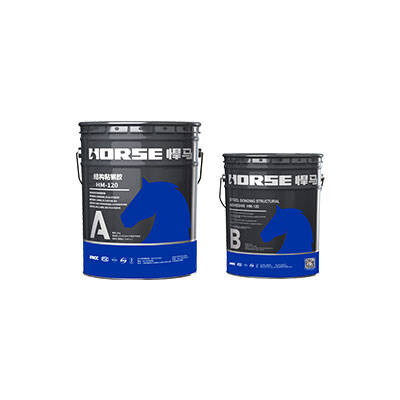
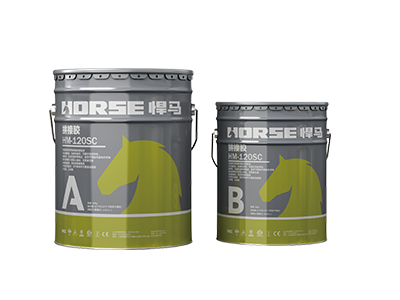
High strength carbon fiber reinforced polymer plate adhesive for applying CFRP laminate/strip/plate on the structural members
