


 Language: English

















Solutions
Horse Construction offers full range of structural strengthening materials with technical supports, documentation supports, products supports, project supports.
Column Test: 0 vs 1 vs 2 Layers Carbon Fiber Wrap
Is Carbon Fiber Effective for Strengthening RC Columns?
A comparative axial compression test at the Horse Construction laboratory: plain concrete cylinders vs. one and two layers of circumferential CFRP wrapping — peak loads, failure modes, and the confinement principle behind the numbers, referenced to ACI 440.2R design practice.
Test Overview
Column strengthening is one of the most common — and most misunderstood — applications of CFRP in structural retrofit. Because carbon fiber fabric is strong only in its fiber direction and carries nothing in compression, engineers outside the FRP field often ask a fair question: how can a thin fabric, wrapped around a column, make that column carry more load?
To answer it with data rather than theory, the Horse Construction laboratory ran a comparative axial compression test on concrete specimens representing axially loaded structural members. Three groups were tested:
Control group — plain (unreinforced) concrete;
One-layer group — concrete wrapped with a single circumferential layer of CFRP;
Two-layer group — concrete wrapped with two circumferential layers of CFRP.
The objective was to make the confinement effect of circumferential CFRP wrapping directly visible: its influence on load-bearing capacity, deformation, cracking behavior, and ultimate compressive strength.
Test Setup and Specimen Preparation
Cylindrical concrete specimens measuring 150 mm in diameter and 450 mm in height were used, giving a height-to-diameter ratio of 3 — a short-column configuration that isolates material and confinement behavior from global slenderness effects.
For the strengthened groups, carbon fiber fabric was cut to specification with sufficient circumferential overlap length, in line with standard FRP installation practice (overlap continuity is what allows the wrap to act as a closed hoop rather than an open band). A matched impregnating (saturating) adhesive was prepared and applied evenly, with air bubbles smoothed out in a single direction to avoid resin-rich or dry zones. Where a second layer was applied, it was installed only after the first layer had reached a tack-free state — the same interlayer timing required on real jobsites.
After full curing, all specimens were tested under axial compression at a constant loading rate, with the complete response — from initial cracking and deformation to final failure — recorded for every group.
Compression Test Results
| Group | Recorded load at failure | Compressive strength* | Gain vs. control |
|---|---|---|---|
| Plain concrete (control) | 1,058 kN | 60 MPa | — |
| One layer of CFRP | 1,300 kN | 74 MPa | +24% |
| Two layers of CFRP | 2,038 kN | 116 MPa | +93% |
*Strength = peak load ÷ gross cross-sectional area (π × 75² = 17,671 mm²).
The failure processes were as different as the numbers. The plain concrete specimen announced its limit early: vertical cracks developed, the surface spalled, and the cylinder crushed in a brittle manner once its unconfined core could no longer sustain the load. The wrapped specimens behaved differently from the first crack onward — cracking sounds developed inside the concrete, but the CFRP jacket held the section together, lateral expansion was restrained, and the specimens continued to carry rising load far beyond the control group's limit. Failure of the wrapped specimens came only when the carbon fabric itself ruptured in the hoop direction — the characteristic sudden, loud rupture of a confinement jacket that has finally been stretched to its limit.
What the Numbers Show
Two results deserve attention:
Confinement works, and it scales. A single layer of CFRP raised compressive strength by 24%; a second layer pushed the gain to 93%. Confinement effectiveness grows with the stiffness of the jacket — more circumferential fiber means more lateral restraint per unit of concrete expansion.
The fabric never carries the vertical load — and still does the work. All axial force was carried by the concrete core. The CFRP acted purely as a restraint on the concrete's lateral deformation, yet produced a near-doubling of capacity at two layers. This is the essential mechanic of column strengthening with FRP.
The Underlying Principle: Passive Confinement
Under axial compression, concrete does not simply shorten — it expands laterally. Unrestrained, this expansion opens vertical cracks, splits the cover, and triggers brittle crushing at the concrete's uniaxial strength.
A circumferential FRP jacket changes that mechanism. As the concrete tries to expand, it strains the jacket in the hoop direction; the jacket, being extremely stiff and strong in tension, pushes back with a lateral confining pressure. The concrete core is thereby placed in a triaxial compressive stress state — and triaxially confined concrete sustains both far higher axial stress and far larger axial strain before failure.
This is the basis of the design models used internationally. ACI 440.2R, the principal guide for externally bonded FRP systems, evaluates the confined compressive strength of circular concrete with Lam-and-Teng-type models in which the confined strength grows with the confining pressure provided by the jacket; the fib bulletins follow the same confined-concrete theory. Two design details are worth noting:
The jacket is passive. It does nothing until the concrete expands. Its contribution is mobilized by deformation — which is why confinement improves ductility even more dramatically than strength, and why this demonstration shows behavior change, not just a higher number.
Rupture strain governs. The jacket works only up to hoop rupture, and design guides therefore cap the effective hoop strain below the material's ultimate tensile strain, accounting for the multiaxial stress state in the bent fibers, curvature at the section perimeter, and installation tolerances.
What This Means for Real Columns
Translated from the laboratory to the structure, circumferential CFRP wrapping delivers three things that matter to practicing engineers:
Axial capacity for columns whose loads have grown — added floors, changed occupancy, heavier equipment — without enlarging the section or adding meaningful weight;
Ductility, the property that decides whether an overloaded column degrades gracefully or fails in a brittle, sudden mode. In seismic regions this is often the primary reason columns are wrapped at all;
Shear resistance, since the same hoop jacket that confines the core also restrains the diagonal shear cracks that govern column shear failure.
One clarification for specifiers: circumferential wrapping is a confinement and shear measure. Flexural strengthening of a column — where that is the requirement — calls for longitudinal fiber, a different detail with a different purpose.
Boundaries of the Demonstration
A laboratory comparison is a demonstration of mechanism, not a substitute for design. Honest boundaries of this test:
The 150 × 450 mm specimens are short columns; real columns must additionally be checked for slenderness and second-order effects, which confinement does not address.
Confinement efficiency is highest on circular sections. Rectangular columns confine effectively only after corner rounding, and their jacket demand is computed differently under ACI 440.2R.
The test used monotonic loading. The ductility benefit that makes FRP jackets so valuable in seismic retrofit is best verified under reversed cyclic loading.
Design capacity on a real project must come from project-specific calculation with the actual materials' qualified properties — the percentages above describe these specimens, not a guaranteed multiplier for any column.
Conclusion
So — is carbon fiber effective for strengthening RC columns? The compression test gives a concrete answer: wrapped circumferentially, a single CFRP layer raised the compressive strength of the test specimens by 24%, and two layers by 93%, while transforming the failure mode from brittle crushing into a restrained, ductile response. The fabric carries no axial load itself; its job is to hold the concrete together — and as the test shows, it does that job remarkably well.
https://www.youtube.com/shorts/wqpDzn-foTU
Have a Similar Project? Talk to Us.
Horse Construction is a Shanghai-based manufacturer of structural strengthening materials, with two full product lines trusted on projects in 100+ countries — and an in-house laboratory where systems like the one above are tested before they reach your jobsite:
Carbon fiber systems — CFRP fabric, CFRP laminates, pre-stressed CFRP laminate systems, carbon rebars and tendons, with matched saturating epoxies;
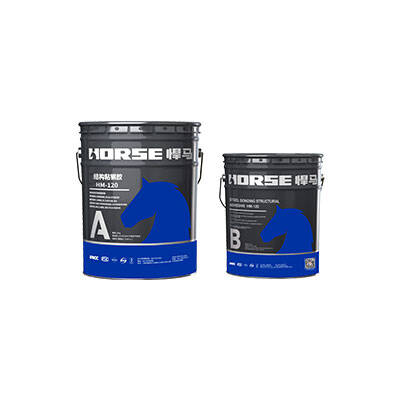
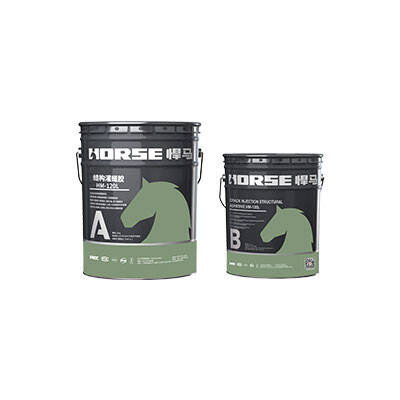
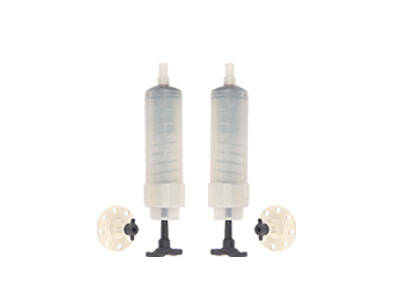
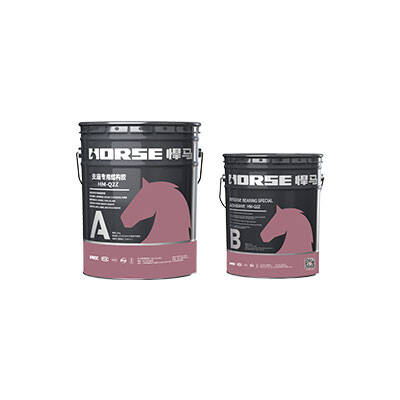
Structural adhesives — steel-bonding adhesive, rebar-planting adhesive, crack injection and pouring adhesives, and segment joint adhesive.
If your project involves column strengthening, seismic retrofit, or similar work, contact us — we will do everything we can to support you, from material selection and test data to on-time delivery.
You can find anything here you are in need of, have a trust trying on these products, you will find the big difference after that.

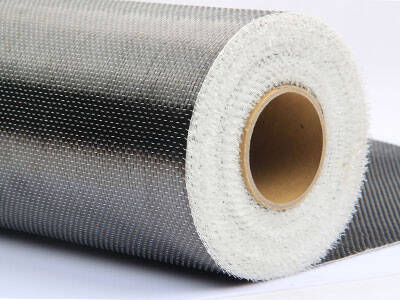
High strength, unidirectional carbon fiber fabric pre-saturated to form a carbon fiber reinforced polymer (CFRP) fabric used to strengthen structural concrete elements.

High strength, unidirectional carbon fiber sheet pre-saturated to form a carbon fiber reinforced polymer (CFRP) sheet used to strengthen structural concrete elements.

High strength unidirectional carbon fiber fabric for concrete repair and structural strengthening
